

It can be challenging for health professionals to access relevant education and training, so that’s why we run a popular regular webinar series designed specifically for health professionals. The topics are chosen based on requests we receive, so if there is a topic you would like, please let us know. There is a mix of daytime and evening sessions, and although we encourage live participation, sessions are recorded for those unable to watch live.
Our education programme is endorsed by the Royal New Zealand College of General Practitioners (RNZCGP) – Learn more.
Coming soon – register now

PROFESSIONAL BOUNDARIES IN RURAL PRACTICE
Living and working in a rural community can bring unique rewards and complex professional challenges.
KETAMINE USE IN PALLIATIVE CARE
Ketamine has a longstanding but sometimes controversial role in managing complex pain in palliative care.
No results found.
Recorded webinars to view
PATIENT PERSPECTIVES OF AI IN HEALTHCARE
With the rapid advancement of artificial intelligence (AI) in healthcare, clinicians and health services must prioritise patient perspectives on AI use in care and the secondary use of health
information in AI development and testing.
CHARLES BONNET SYNDROME: RECOGNISING THE SIGNS AND SUPPORTING PATIENTS
Charles Bonnet Syndrome (CBS) is a common but often under-recognised condition affecting people with end stage retinal disease.
HEARING LOSS: MORE THAN JUST HEARING
Hearing loss is increasingly common in both New Zealand’s ageing population and younger people, yet many who notice difficulties delay seeking help.
WOUNDCARE – SHARED CARE, BETTER OUTCOMES
People are increasingly expected to take an active role in their healthcare, yet wound management has often remained clinician-led. This session explores how
health professionals can create genuine partnerships with patients, developing care plans that reflect individual goals, circumstances and preferences.
WHY DOES IT STILL HURT
Persistent pain is one of the most common and complex conditions encountered in healthcare and is o en influenced by multiple health conditions, social circumstances, and psychological factors.
HEALTH NZ’S NATIONAL PALLIATIVE CARE WORK PROGRAMME
Health NZ’s Palliative Care Team will provide an update on the National Palliative Care Work Programme, including progress from design to implementation.
UNMASKING PAEDIATRIC SEPSIS
Paediatric sepsis can be difficult to recognise, particularly in its early stages, yet early identification and treatment are critical to improving outcomes.
GETTING COMPLIANT WITH INSTRUMENT REPROCESSING
Infection prevention and control is an important component of the Foundation Standard. Medical centres and GP practices using small benchtop sterilisers to reprocess surgical instruments and reusable medical devices must meet the current standard, AS/NZS 5369.
TE WHARE KAIAO
Te Whare Kaiao is a newly developed framework for children’s palliative care that was developed using a Kaupapa Māori community participatory research approach.
THE BIG QUESTIONS
The Big Questions – Opening Up Conversations about Life and Death | Ngā Pātai Nunui – Te tūhura i ngā kōrero mō te ora me te mate.

CLEAN IT LIKE YOU MEAN IT!
Join us for a session focused on evidence-based approaches to managing hard-to-heal wounds. Mandy Pagan will review current best practice documents, the importance of early intervention, and the four principles of Wound Hygiene: Cleanse, Debride, Refashion Wound Edges, and Dress.
WHAT WOUND, WHAT DRESSING?
This engaging session will cover wound healing principles, assessment, and aetiology, alongside a focused look at atypical wounds. You’ll be introduced to the TIMERS framework for structured tissue assessment and explore practical approaches to debridement, including when and how to apply different techniques.
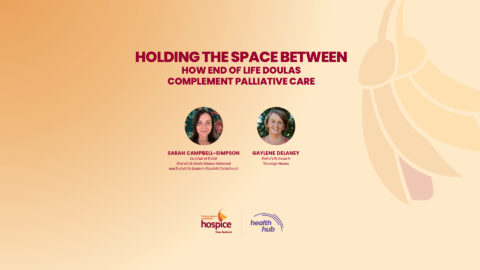
HOLDING THE SPACE BETWEEN: END OF LIFE DOULAS
Explore how End of Life Doulas provide non-clinical, relational support across serious illness, dying, death, and bereavement. This session highlights their role alongside palliative care in Aotearoa New Zealand, supporting patients and whanau between clinical touchpoints.
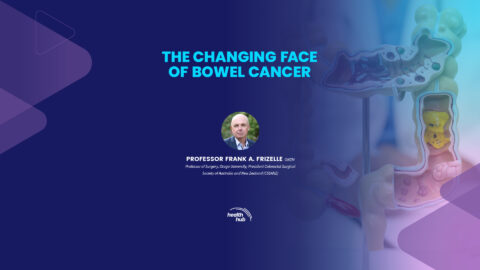
THE CHANGING FACE OF BOWEL CANCER
Bowel cancer a ects one in 18 New Zealanders during their lifetime. It is the 2nd leading cause of cancer death in NZ, with around 3,500 cases and 1,350 deaths each year. This webinar will explore how its presentation is evolving and who is most at risk.
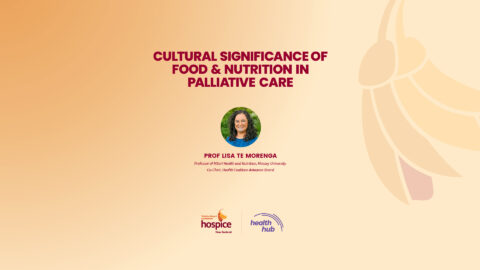
CULTURAL SIGNIFICANCE OF FOOD & NUTRITION IN PALLIATIVE CARE
Kai Maori means more than good nutrition. This webinar will explore kai, a medium for connection, reciprocity, and manaaki.
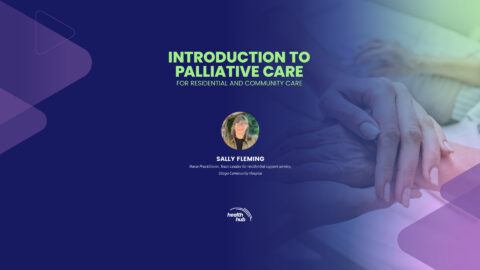
INTRODUCTION TO PALLIATIVE CARE
Palliative care is often misunderstood as something offered only at the very end of life but in reality, it’s about improving quality of life. This session, curated for residential and community, explores what palliative
care really is, who it’s for, and how a palliative approach can support ...
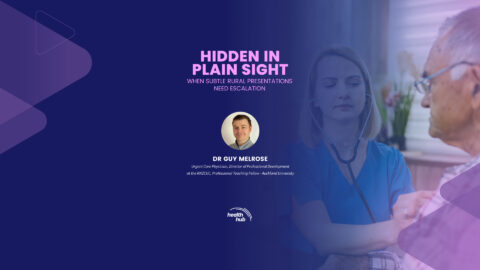
HIDDEN IN PLAIN SIGHT
Patients in rural settings don’t always present with obvious red flags. Some serious conditions lurk beneath subtle symptoms, stable observations, or reassuring first impressions. This webinar explores rural cases that appear low risk but may require escalation.
THE PRESSURE INJURY CONUNDRUM
Pressure injuries are rarely as simple as they appear. Behind every wound lies a complex interplay of forces, risk factors, and clinical decisions that can make or break patient outcomes.
POLYPHARMACY AND DEPRESCRIBING IN PALLIATIVE CARE
Polypharmacy is a growing patient safety concern in Aotearoa New Zealand. The risk of medication-related harm rises significantly when patients take five or more medicines—and currently, nearly 46.5% of people aged 65+ are prescribed ...
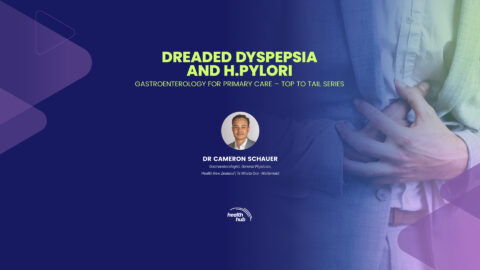
DREADED DYSPEPSIA AND H.PYLORI
Dyspepsia is common in general practice, but deciding who to test, treat, or refer can be challenging. This session will outline a practical, GP-focused approach to dyspepsia and Helicobacter pylori. It will cover when “test and treat” is appropriate and who requires early endoscopy, in addition to interpreting alarm...
No results found.

© Copyright My Health Hub 2024 - All rights reserved
Website by: Qora Health Branding